Research
001
2020
Water Futures
Water Futures is WaterBoys' design research into urban water systems — how cities will source, distribute, and consume water as climate change, population growth, and aging infrastructure compound. The research produced a single, testable proposition: that the barrier to sustainable water consumption is not access to clean water, but access to a convenient alternative to the plastic bottle. WaterBoys, a circular water bottle rental service, is the designed proof.
Track
SERVICE + PRODUCT
Status
Published
Output
WaterBoys Service
YEAR
2020
Water - Service - Urban
The Thesis
The plastic water bottle may be one of the most damaging objects in the urban environment. It is also, consistently, the most convenient. When you need water most — commuting, exercising, moving through a city — the disposable option is right there. The reusable one is not. This is not a values problem. It is a design problem.
Water Futures asked a specific question: how do you make sustainable hydration as convenient as buying a bottle? Not more convenient. Just as convenient. That gap — the convenience gap — is where the research focused. The answer was not a new technology. It was a service model. A circular water bottle rental network, embedded in the small businesses and public spaces that a community already uses. Pickup. Drink. Refill. Return. The loop closes locally.
THE WATER EMERGENCY
Cities are running out of reliable water. The trajectory is documented: population growth, aging infrastructure, industrial pollution, and climate-driven disruption all converging on systems that were built for a different era and a different scale of demand. Day Zero — the point at which a city's taps run dry — is no longer a theoretical scenario. It has happened in Cape Town. It is recurring in Jackson, Mississippi. It is coming, in some form, to more cities.
The conventional response to water scarcity is infrastructure: new pipes, new treatment plants, new reservoirs. These are necessary, and they are slow, expensive, and politically difficult to build. The design question is different: while the infrastructure catches up, what can change about how people access and consume water right now? What interventions are available at the community scale, within existing budgets and existing spaces, that reduce dependence on single-use plastic and build toward something more resilient?
Water Futures did not set out to replace infrastructure. It set out to design the layer above it — the service that makes municipal tap water as accessible and convenient as a plastic bottle from a bodega.
THE DESIGN REFRAME
Only 28 percent of consumers believe brands make it easy for them to live sustainably. That number has not moved significantly in years. The problem is not that people don't care. The problem is that caring is inconvenient. Sustainable choices require effort, planning, and friction. Unsustainable ones do not.
This is a design failure, not a values failure. And design failures have design solutions.
The research identified three types of water consumers: the Indifferents, who prioritize convenience above all else; the Zero Wasters, who will not compromise sustainability regardless of inconvenience; and the people in between — the "I'm Trying" majority, who want to do the right thing but will choose the plastic bottle the moment the sustainable option requires any additional effort. This group is the design target. Not because they are the most committed, but because they are the most numerous — and because a well-designed service can move them without requiring any change in values at all.
The design move is simple: remove the friction. Make the sustainable option as easy as the disposable one. In practice, this means putting pickup and return points where people already go — the bodega, the café, the gym, the park. It means contactless checkout. It means a bottle that is always pre-filled and ready. The behavior change follows the design, not the other way around.
THE SERVICE
WaterBoys is a circular water bottle rental service built around four steps: Pickup, Drink, Refill, Return.
Customers pick up a pre-filled stainless steel bottle from any WaterBoys location using the mobile app — contactless checkout, QR code on the bottle. They drink, refill at any participating station or exchange for a fresh bottle at any pickup point, and return the bottle when done. The service is designed for a neighborhood scale: a defined radius, a network of local businesses, a community that becomes familiar with the infrastructure over time.
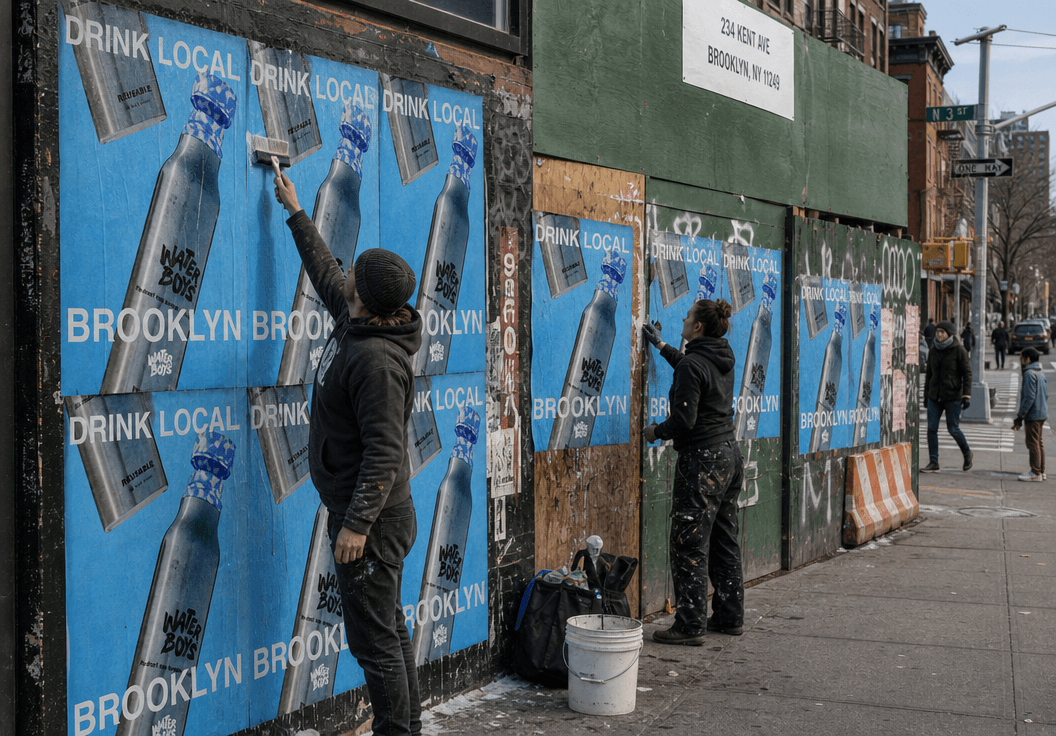
The service launched in Williamsburg, Brooklyn — a neighborhood dense enough to support the network, diverse enough in its communities to test the equity assumptions. Pickup and return points are embedded in bodegas, cafes, and community spaces that residents already use. The service does not ask people to go anywhere new. It meets them where they already are.
Four principles govern the service:
Accessibility — affordable pricing, widespread network, no barriers by age, income, or background.
Quality — durable double-wall stainless steel bottles, reliable municipal water sources, safe and tested.
Transparency — clear communication on sanitation, sourcing, and service operations.
Convenience — mobile app, contactless transactions, seamless exchange. Every friction point designed out.
CLOSING
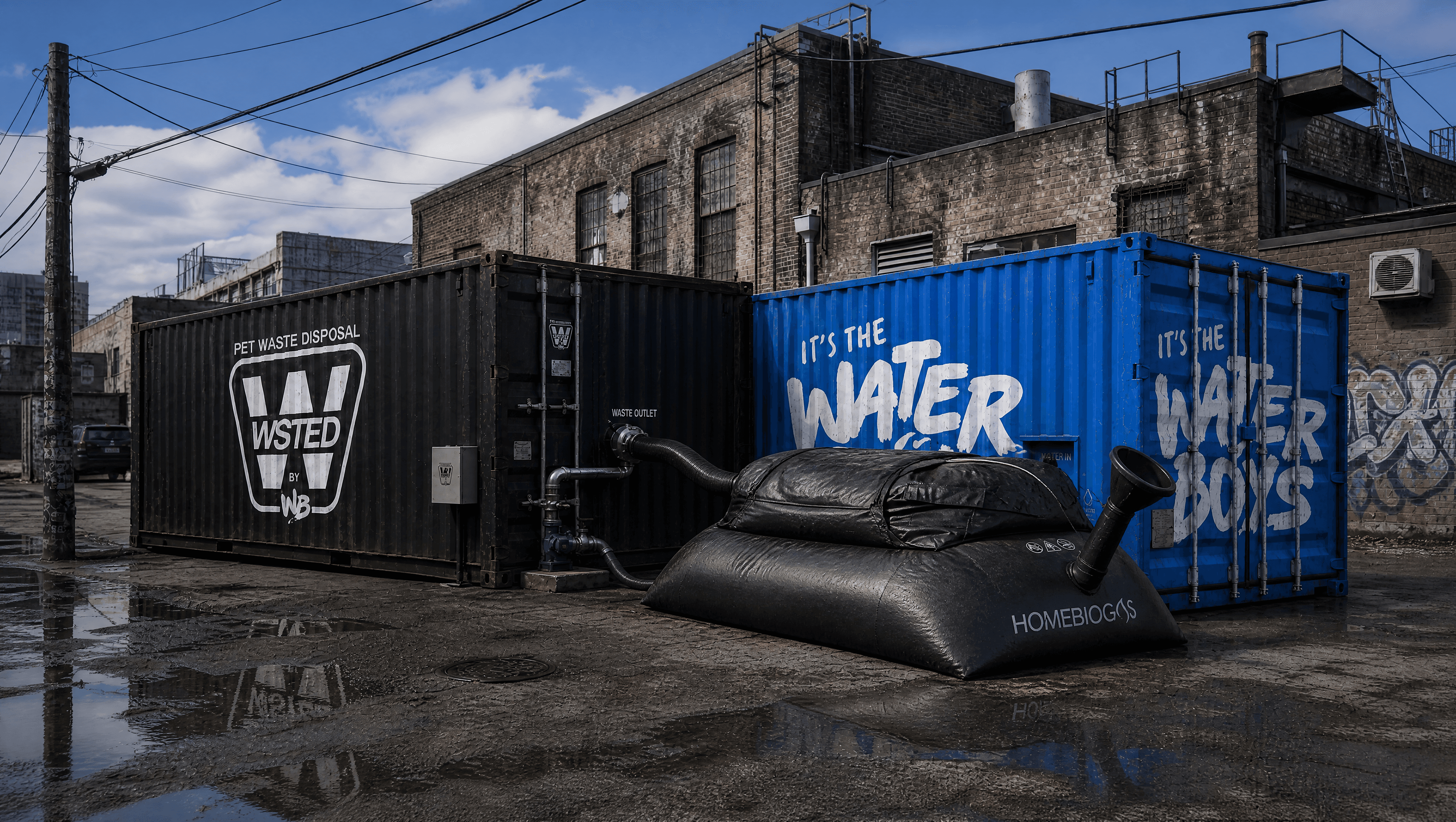
Behind the service is a localized operational infrastructure: cleaning and servicing hubs embedded within the community, not centralized in a warehouse across the city. Each hub services a defined radius. Bottles are collected, sanitized, refilled, and redistributed locally. Transport distances are short. The environmental footprint of the operation is minimal.
This "nano-factory" model — the same logic that grounds the studio's broader Nano Factory research — keeps economic activity within the community. The people who run the service nodes are members of the community they serve. The water that fills the bottles comes from the local municipal system. The loop is genuinely local: from the tap, through the service, back to the community, and around again.
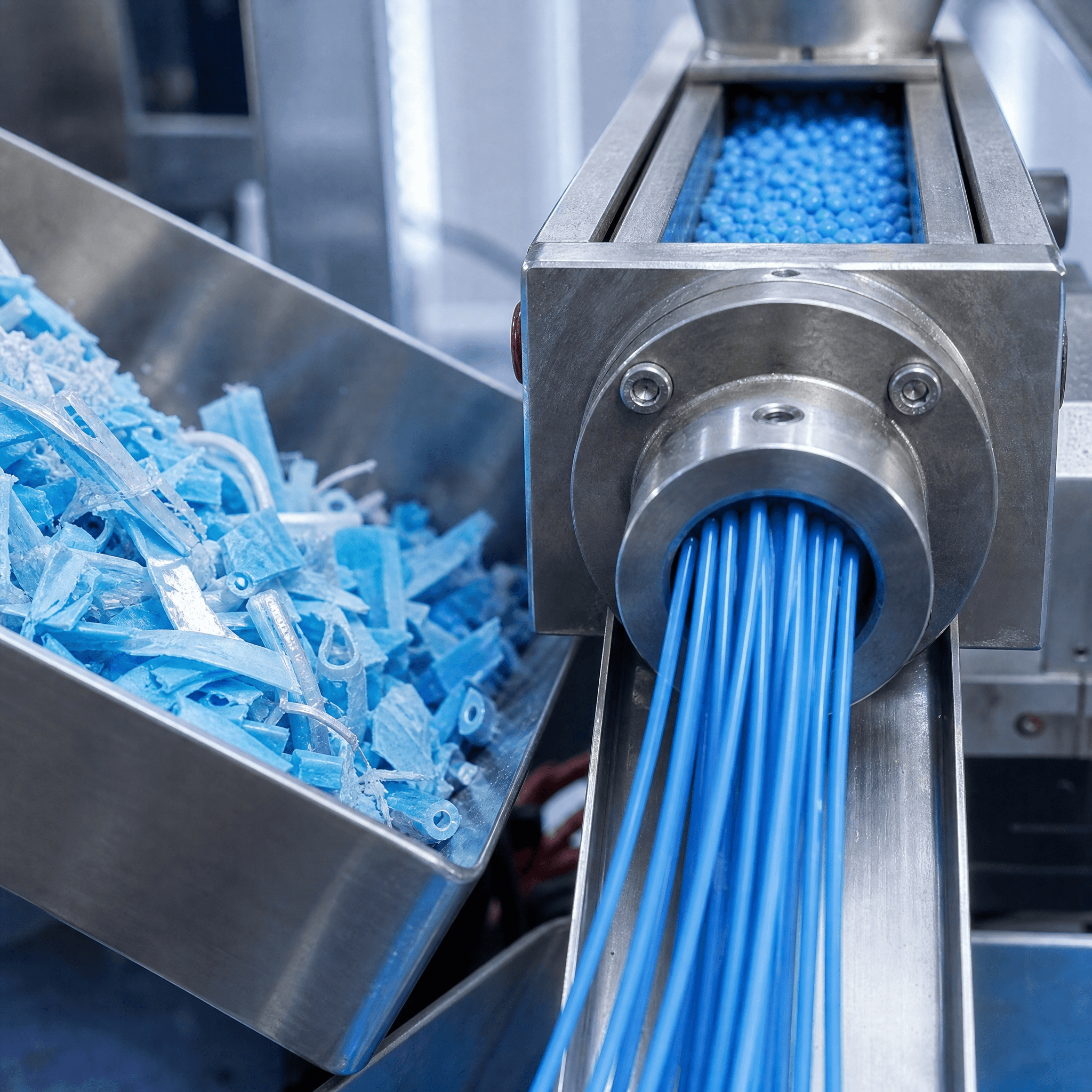
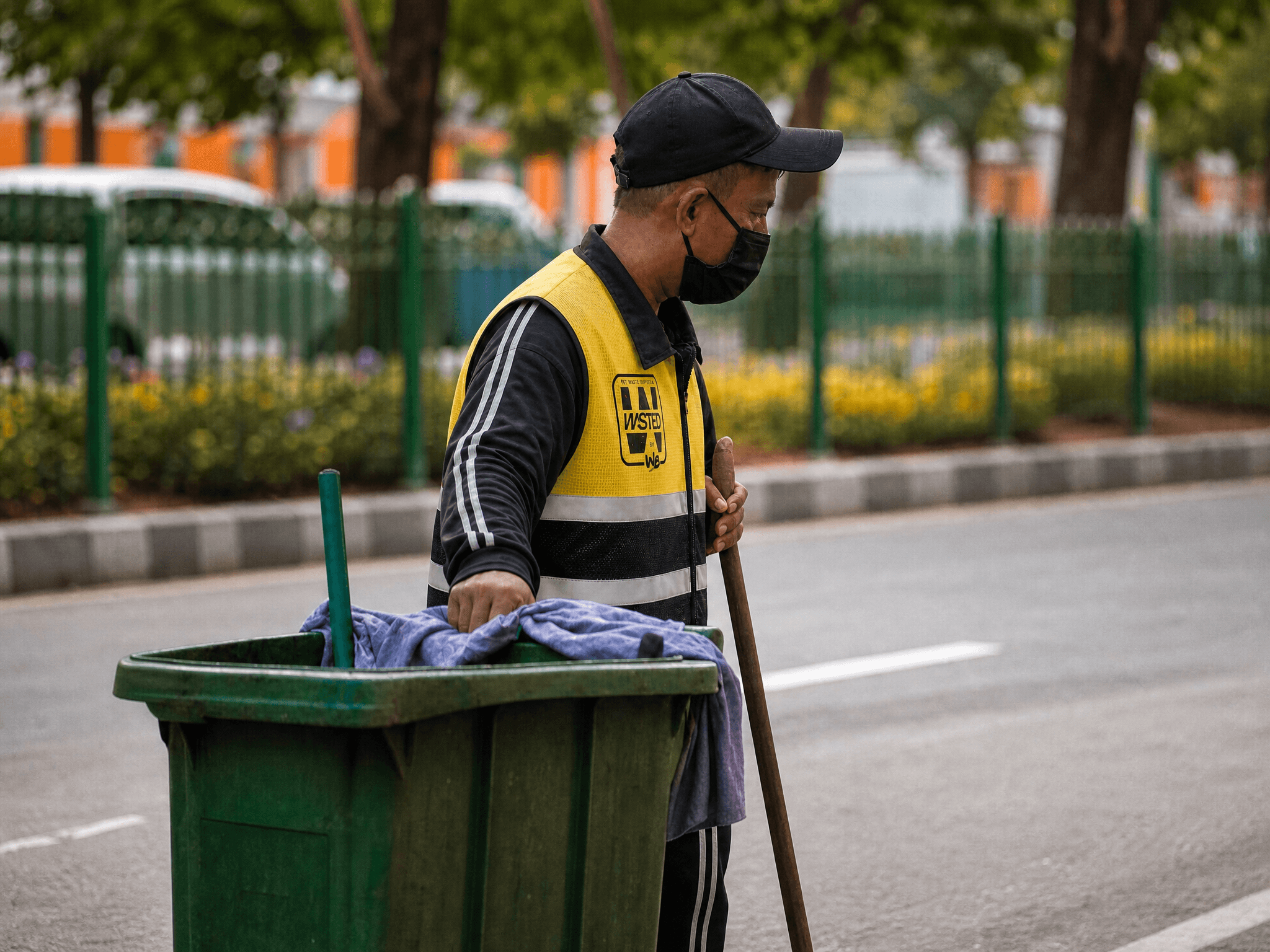
The customer journey maps the full cycle: production, bottle awareness and sign-up, point of sale, fill, hand-off, drink, inventory, point of return, recover, decommissioned caps. Nothing leaves the system. The cap — made from recycled polypropylene — is the material connection to the studio's WSTED research: mask waste and pet waste processed into the component that closes the bottle loop.
CLOSING
Water Futures demonstrated something specific: that the convenience gap is closable. That a well-designed service, embedded in existing community infrastructure, can make sustainable hydration the default rather than the effort. That the barrier was never technology. It was friction.
The WaterBoys service is the research made operational. A circular system, designed at neighborhood scale, that does not ask people to change what they value — only what they find easy. That is the design proposition. The infrastructure follows.